


What is AI? – Allison
Artificial Intelligence, more commonly known as AI, is a type of technology that helps computers and machines act in human-like ways, such as solving problems, making decisions, understanding information, and sometimes even showing creativity. You can think of AI as a big set of ideas and information that are organized to help a machine “think” in a simple, human-like way.
Devices that use AI can see and identify things that are shown to them, then respond based on what they recognize. They can also save the information they learn and use it later on. Newer types of AI can even discover new patterns on their own, reducing the amount of human work needed for certain tasks.
Most people use AI every day, often without even noticing it. Some common examples of AI include ChatGPT, self-driving cars, Siri, Alexa, and facial recognition on phones or apps. All of these systems can look for patterns in what they see or hear and make connections so they can respond correctly.
AI works by following algorithms, which are basically step-by-step rules for understanding data. As it receives more information over time, it becomes better at predicting outcomes and can even create its own ways of solving new problems.
As AI continues to expand and improve rapidly, it is important to understand the role it can play in our lives and how we could use it to make our everyday routines smoother!
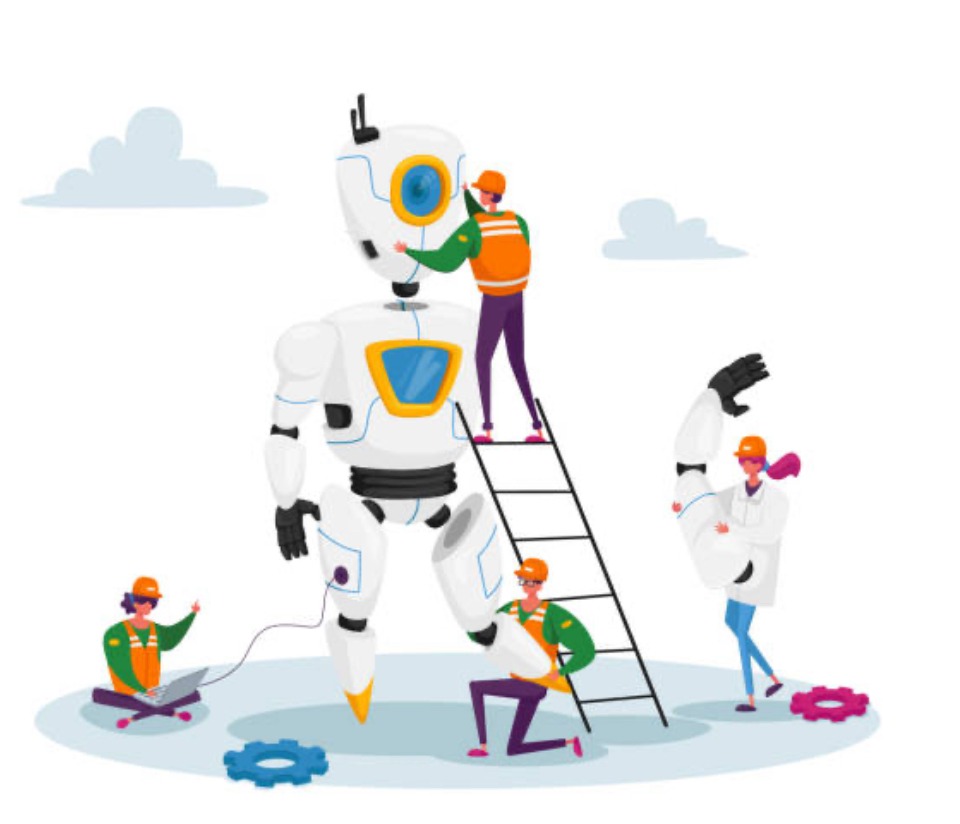
The Latest News! – Weiyu
In late October of 2025, a company called 1X technologies introduced a human-like robot called NEO. NEO is the first consumer-ready humanoid robot designed for home use, meaning that it is designed to help you at home. In a demonstration, NEO was able to open doors and carry dishes into the kitchen. The company is offering pre-order of the robots, which is predicted to begin actual delivery and usage in 2026.
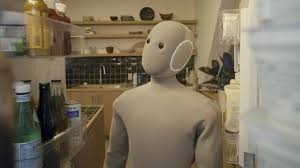
With NEO, you can spend a lot of time doing other things while someone else helps you fold your clothes, wash your dishes, and clean your house. NEO is able to do this with the help of AI, which will be part of its system. It will be able to respond to voice commands, meaning you can tell NEO what to do and he will respond to your commands. This is a big step towards having AI being able to physically interact in our life. The development of NEO is a huge milestone for AI development, showing that AI doesn’t have to be limited to thinking and coming up with things, but can also actually do physical work for us. Maybe in the future, we will all have a robot like NEO, who can make our lives easier!

Fun Facts! – Chloe Lin
- Many AI-driven robots now can self heal! These robots can now fix malfunctions or damage without any human help and are mainly based on the human body’s ability to heal.
- Did you know that around 78% of global companies now incorporate some part or aspect of AI into their daily operations? For example, some install AI chatbots that can help answer customer’s questions and assist for efficiency.
- AI helps with new innovations in healthcare because it can provide personalized treatment plans for individuals, and can help with the diagnoses of diseases. 🏥
- NASA, which stands for National Aeronautics and Space Administration, uses AI to help them navigate rovers on Mars, for example, and to help the rovers (which is a type of technology built to observe terrain of a planet remotely,) overcome obstacles. AI in space can also analyze the different environments, sending the data to us!

- In the next decade, it’s predicted that AI will replace 9.1% of jobs in the workforce.
- Maybe you haven’t noticed how AI plays a role in daily life, from Face ID when unlocking a device, your phone predicting the next word you might type, to asking your phone a question. That’s all AI! 📱
- Have you ever wondered how platforms like Youtube or Netflix recommend your next watch or your for you page? Artificial intelligence is using the data of what you previously watched or liked to make decisions on what to present to you!

- It might not be now, but jobs for managing AI are going to be in high demand in the future, opening up many job opportunities!
- The concept, or idea of AI, was officially introduced in 1956.
- 34 million AI generated photos, or photos produced by AI, are created daily.
- Did you know that a robot citizen existed? That’s right. Meet Sophia, who is the first robot citizen of Saudi Arabia. Sophia can interact with humans, and also show expressions that are very human-like! 🤖
History – Romero Santiago
For centuries, people have been dreaming about machines that can perform everyday chores and tasks, going all the way back to the ancient Greeks. But it wasn’t until 1936 when artificial intelligence was built into action.
Mathematician Alan Turing invented the Turing machine, which most call the world’s first computer. It was a machine that ran calculations, eliminating all human error in the process. Turing also assisted in World War Ⅱ by creating a machine that cracked a code used by the enemy that eventually led to the Allied powers freeing Europe.

After the war, Turing came up with the Turing test in 1950, a way to see how much intelligent behavior a computer can generate by having a user of a program guess who is a human and who is a computer.
Since then, a lot of engineers had taken a stab at using Turing’s rules and principles to make games and experiment with these new findings. The idea of a machine learning about a task through experience also piqued a lot of people’s interest.
1955 was when the term ‘artificial intelligence’ was coined by John McCarthy, who then proceeded to turn this idea of machines that function on their own into an academic subject. The growth of computers and computer science let experimentation and testing of this idea flourish.
Over the decades, AI just kept developing. The 1990s saw a huge increase in a program’s ability to learn from experience, the 2000s had programs and machines that had ways for improving its user experience take front and center, and the 2010s saw AI get to the point where it could think for itself without needing humans to tell it what to do. Today, AI chatbots are the biggest craze. They allow for conversation and the making of new ideas, making them an amazing hit in business.
The growth of AI is far from over. It’s already taking the place of several jobs, and its ability to develop is just getting better and better as time goes on.
Career – Chloe Hsu
Some careers involving AI include:
- Machine learning engineer: Machine learning engineers develop algorithms for machines to learn from data and make decisions.
- Data scientist: Data scientists analyze data to make decisions. They need to use programming languages such as Python and R to be successful.
- Data mining and analysis: Professionals in data mining and analysis analyze trends in large data.
- AI research scientist: AI research scientists create experiments. Usually, it is required to have a degree in computer science.
- AI FinTech Developer: AI FinTech Developers design solutions to financial technologies. They must know programming and financial systems.
- Robotics Engineer: Robotics Engineers design and build robots that can complete tasks. They use AI in their robots to increase functionality in the robot.
- Computer vision engineer: Computer vision engineers create systems that analyze visual data in the real world. Examples are facial recognition, and autonomous vehicles.
- NLP engineer: NLP engineers make systems that can interact with human language, such as translation. Text mining and machine learning are needed for this role.
What Does This Have To Do With Me? – Xinye Zhu
Artificial Intelligence or “AI” has truly begun its big boom in the late decade, and has spiked in popularity, being used nearly everywhere on the internet. You may begin to wonder how this technological advancement will affect you and your daily life. Well, the short answer is, it already has. Even excluding social media, AI has rapidly been integrated into everyday apps that humans of all ages use. From educational and study apps that use AI to analyze what tools you prefer to use when studying, to AI chat boxes that pop up in the corner of your screen when on a website, there is already a huge range in the variety of Artificial Intelligence being utilized in our digital lives.
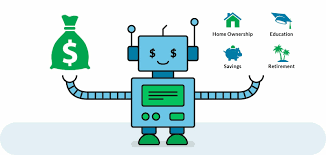
AI tools are also now being created to be advisors of all sorts. Financial advisors who consult people on how to spend their money, budgeting, and everything related to expenses. The robot is even found to be an influencer on your daily life, money spending habits, and has now infiltrated the daily feed of the media. While on your hourly doomscroll, how many shorts or clips that you zoom by do you think are AI-generated? Chances are, pretty likely. Companies that create these robots are advancing their technology every day to the point that the line between real creativity worked on by human hands and artificially generated media is blurred to little to no distinction. But we’ve found ways to physically benefit from Artificial Intelligence, and that’s in healthcare! AI can monitor patient health, improve the already existing medical technology, and overall save Big Pharma almost 100 billion dollars annually.
These robots have and will continuously change the future of society in every single person’s life, but it’s up to you to decide how you want them to influence your existence.
Bonus Quiz – Claire
What is something that Neo can do?
- Open doors
- Walk dogs
- Fly into outer space
- Read human minds
When will Neo delivery and usage begin?
- 2030
- 2028
- 3000
- 2026
How many percent of jobs will AI replace in the workforce?
- 20%
- 100%
- 90.1%
- 32.5%
When was AI built into action?
- 1940
- 1980
- 2012
- 1936
What is a career involving AI?
- AI research scientist
- Ecologist
- AI teacher
- Chef
What may be AI generated?
- Videos on social media
- Your kitchen
- Animals
- Office buildings
What does AI stand for?
- Amazing interconnections
- Artificial intelligence
- Abolished internet
- Accepted intellect
Is AI considered good or bad for the environment?
- Good
- Bad
- Not sure
- A bit of both
FAQ on AI – Claire
What is AI and what does it stand for?
AI stands for Artificial Intelligence, and it essentially codes algorithms and uses that complex coding to help it perform human intellectual tasks. AI can be either simple or complex.
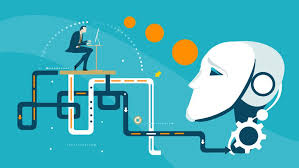
How does AI work?
AI works by making decisions, processing complicated information, and recognizing patterns. It takes data or information that you input (images or text) and identifies patterns that help it make a prediction or decision about the given information.
What are the different types of AI?
AI is split into two different areas. Basic types of AI include: Alexa, Siri, ChatGPT, Face ID, Google Translate (or any translation). Strong/general AI includes striving to mimic a human’s mind and mental thinking, or used for complex coding.
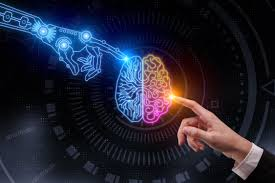
What is the most commonly used AI today?
The most commonly used AI today is ChatGPT, a weaker basic AI model that is used by almost everyone to this current day. ChatGPT specializes in specific tasks and although it is not able to do everything a human can do, it can give you text based answers on your questions.
What is AI mainly used for?
AI is mainly used for repetitive tasks, it reduces errors that a human could make, and it helps free up our time and take on challenging tasks that we would rather not do ourselves.
Is AI good or bad for the environment?
AI is both good and bad for the environment. On the negative side AI causes energy consumption (takes a lot of power and produces carbon emissions), as well as produces electronic waste, and it supports AI operators to take up water and energy sources. On the positive side, it reduces manufacturing and agriculture use, and satellite data can cause pollution and climate change. It also increases a need for electricity, which could mean potentially more fossil fuels.
Will AI replace jobs? And if so, what jobs?
Yes, it is possible that with the current fast advancement of AI and the fact that it’s able to cover so many things, AI might one day replace jobs. Some jobs that AI may replace include manufacturing jobs, customer service, small human tasks, transportation, (some advanced AI can drive its own vehicles and drones), and finance and banking jobs (such as financial advising).
What is the future going to look like for AI?
In the future, AI will continue to advance faster than ever and stretch into more industries and fields. Soon, more ethical questions will be asked about AI, about whether it is reasonable and/or/if we need to govern it. However, it will soon continue to work with us, helping us advance and become more efficient, replacing human efforts.


Leave a Reply